
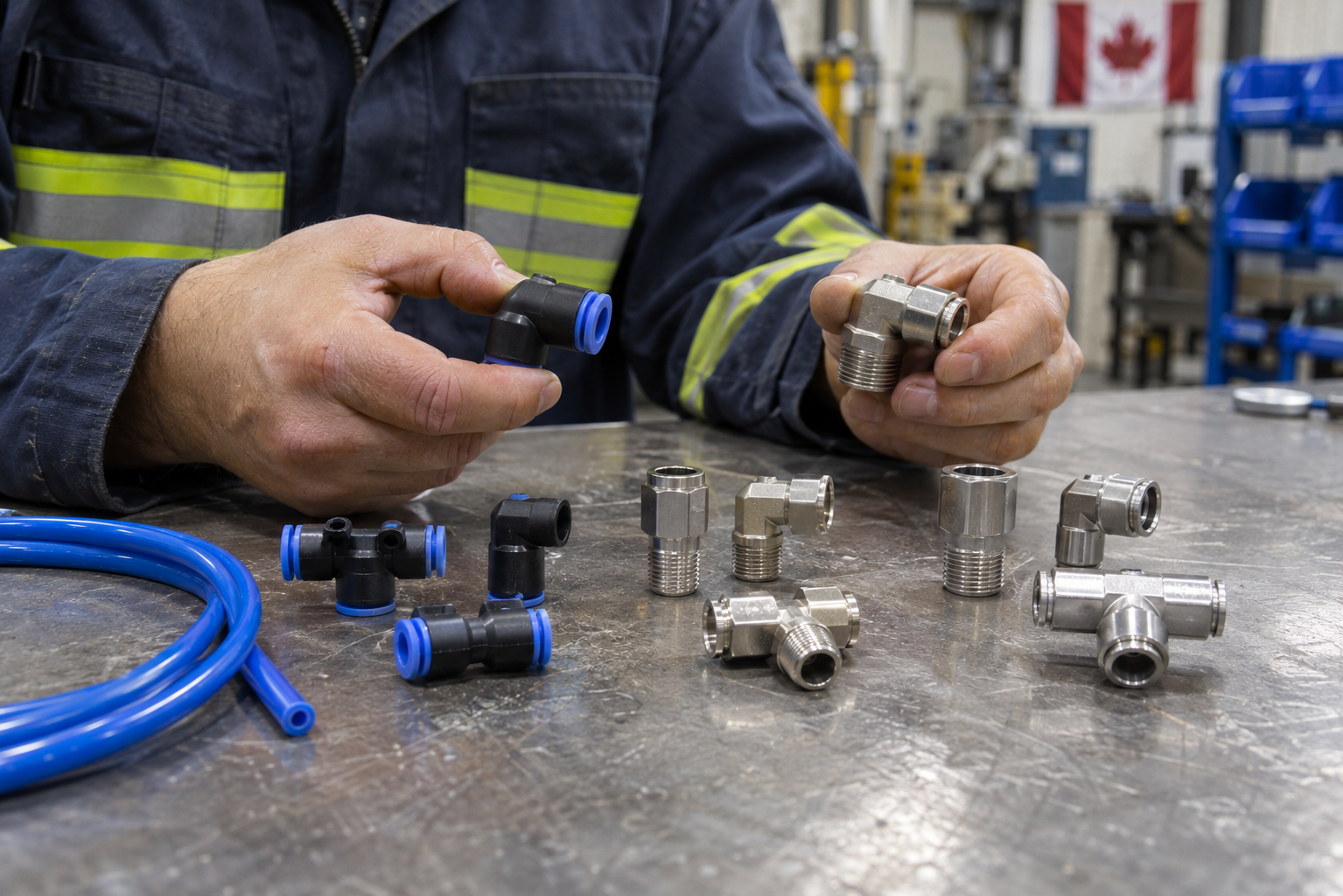
Choosing pneumatic fittings for industrial machinery involves more than matching a thread size or replacing an existing component with a similar-looking part. Each fitting must be compatible with the tubing, connected equipment, and operating environment.
Material selection, pressure and temperature requirements, installation space, and maintenance access can all influence whether a fitting is appropriate for a particular application. Overlooking these factors may lead to installation difficulties, connection problems, or unnecessary component replacement.
Understanding how to choose pneumatic fittings helps maintenance teams, machine builders, and industrial buyers evaluate their options before purchasing replacement components or specifying parts for new equipment.
This guide outlines the main selection criteria, practical compatibility checks, and common mistakes to avoid.
Why Fitting Selection Requires More Than Matching Connection Sizes
Pneumatic fittings connect tubing to valves, cylinders, manifolds, and other compressed-air system components. These connections must accommodate the equipment’s physical configuration and operating requirements.
Although connection dimensions are important, they represent only one part of the selection process.
A fitting may have the correct thread size but still be unsuitable because of its tubing connection, material composition, pressure rating, or installation requirements. Similar-looking components should not automatically be treated as interchangeable.
Before selecting a fitting, determine how the connection will be installed, whether the tubing and equipment are compatible, and what operating conditions the connection will experience.
Reviewing the available categories of pneumatic fittings can help identify appropriate connection styles and material options.
However, the final choice should always reflect the manufacturer’s specifications and the requirements of the intended application.
Confirm Fitting Type and Tubing Compatibility First
Tubing compatibility is one of the first requirements to verify during pneumatic fitting selection.
Start by confirming the tubing’s outside diameter, material, and dimensional tolerances. Push-to-connect fittings, for example, are generally specified for particular tubing dimensions and characteristics.
Even small dimensional differences can affect whether a tubing connection meets the fitting manufacturer’s requirements.
Thread compatibility requires similar attention. Identify the thread standard, nominal size, and connection design before selecting a replacement fitting.
Different thread standards can appear similar, particularly when comparing existing components without their original documentation. Matching nominal sizes does not necessarily establish compatibility.
Connection configuration also matters. Straight, elbow, and tee fittings accommodate different routing requirements and equipment layouts.
For example, polyurethane pneumatic tubing may be considered for suitable industrial compressed-air applications. However, its compatibility with a particular fitting must be confirmed through manufacturer specifications.
Existing tubing should also be inspected for cuts, deformation, surface damage, or other conditions that could affect connection integrity.
Before purchasing replacement parts, verify both the fitting specifications and the tubing manufacturer’s installation requirements.
Choose the Fitting Material for the Operating Environment
Pneumatic fitting materials should be selected according to the equipment’s mechanical requirements, operating conditions, and surrounding environment.
Plastic, composite, nickel-plated brass, and stainless steel fittings each have application considerations. No single material is appropriate for every industrial pneumatic system.
Plastic and Composite Fittings
Plastic and composite fittings may be suitable for general pneumatic applications where their construction and rated operating limits meet system requirements.
When considering these fittings, evaluate pressure and temperature ratings, connection design, and exposure to surrounding materials or processes.
The suitability of a plastic or composite fitting depends on its specific construction and manufacturer specifications, not simply its material category.
Nickel-Plated Brass Fittings
Metal fittings may be considered where connection design, mechanical requirements, and environmental conditions influence component selection.
When evaluating nickel-plated brass pneumatic fittings, confirm that the fitting’s material, connection configuration, and rated operating limits suit the intended equipment.
Nickel plating should not be treated as a guarantee of compatibility with every chemical or industrial environment. The specific product specifications remain important.
Stainless Steel Fittings
Stainless steel pneumatic fittings may be considered where corrosion exposure, cleaning procedures, or equipment material specifications influence selection.
However, different stainless steel grades and fitting designs may have different application requirements.
Industrial buyers should evaluate the actual exposure conditions and confirm that the specified fitting material is appropriate.
Selecting between plastic, nickel-plated brass, and stainless steel should involve comparing application requirements rather than assuming that one material is universally superior.
Check Pressure, Temperature, and Environmental Exposure
Pneumatic fitting pressure and temperature requirements must be evaluated against actual operating conditions, not simply the conditions expected during normal production.
Start by identifying the system’s normal operating pressure and maximum anticipated pressure. Confirm that the selected fitting is rated for the applicable requirements.
Temperature must also be considered. Equipment operating near heat-producing machinery, in variable ambient conditions, or in temperature-controlled environments may have different requirements.
Environmental exposure introduces additional considerations.
Moisture, contaminants, cleaning chemicals, and corrosive substances can influence material selection. Applications involving welding or nearby spatter may also require additional attention to fitting placement and protection.
Importantly, fittings should not be evaluated independently from their connected components.
Tubing, fittings, valves, and other system components must each be suitable for the expected conditions. A fitting’s rated operating limits do not establish the suitability of the complete connection.
Consult the manufacturer’s published specifications whenever operating conditions are uncertain or application requirements extend beyond routine component replacement.
Consider Installation Access and Maintenance Requirements
Installation and servicing requirements can influence the most practical fitting configuration.
In manufacturing environments, technicians may need to inspect connections, replace tubing, or service machinery within limited maintenance windows.
The selected connection should accommodate those activities without creating unnecessary access difficulties.
For suitable applications, push-to-connect pneumatic fittings provide a connection method worth considering when installation access and tubing replacement are important.
However, their suitability depends on the tubing specifications, fitting design, operating conditions, and manufacturer installation instructions.
Maintenance teams should consider whether release mechanisms can be accessed safely and whether the tubing can be inspected without interference from nearby components.
Equipment with restricted installation space may require different fitting orientations or connection configurations.
Planning for maintenance during component selection can make future inspection and replacement procedures more practical.
Common Pneumatic Fitting Selection Mistakes
Several common mistakes can result in unsuitable component selection or additional installation work.
Selecting by thread size alone: A matching thread dimension does not establish compatibility with the tubing, connection standard, or operating requirements.
Ignoring tubing outside diameter or material: Nominally similar tubing products may have different dimensional or material specifications.
Overlooking environmental exposure: Moisture, chemicals, cleaning procedures, and nearby industrial processes may influence material suitability.
Assuming fitting materials are interchangeable: Plastic, brass, and stainless steel fittings should be evaluated against the specific application rather than substituted without verification.
Failing to check operating limits: Pressure and temperature requirements must be confirmed for the fitting and connected components.
Neglecting maintenance access: A fitting that is difficult to inspect or disconnect may complicate routine equipment servicing.
These mistakes can often be avoided by reviewing component documentation, checking existing equipment requirements, and confirming compatibility before placing an order.
A Practical Checklist Before Selecting Pneumatic Fittings
Before finalizing a fitting selection, verify the following:
- Connection type and dimensions: Confirm thread standard, size, and fitting configuration.
- Tubing compatibility: Check outside diameter, material, dimensional tolerances, and tubing condition.
- Fitting material: Evaluate construction and suitability for the intended equipment.
- Pressure and temperature: Confirm normal and maximum operating requirements against published ratings.
- Environmental exposure: Consider moisture, chemicals, contamination, and nearby industrial processes.
- Installation and maintenance: Verify available space, inspection access, and tubing replacement requirements.
- Manufacturer specifications: Confirm that the complete fitting and tubing combination meets the application requirements.
A systematic approach to pneumatic fitting selection helps industrial buyers make informed component decisions while accounting for equipment compatibility and maintenance needs.
For additional component options, review the relevant Canada Pneumatics fitting categories or request application-specific assistance when compatibility or operating requirements are uncertain.